Multi-tenant CMS: Scalable Solutions with Headless Flexibility
Businesses managing multiple websites, brands, or client portals need a multi-tenant platform that scales efficiently across multi-tenant CMS environments. A multi-tenant content management system enables independent tenants—each with isolated content, permissions, and branding—to share infrastructure while maintaining strict data separation on a single multi-tenant platform.

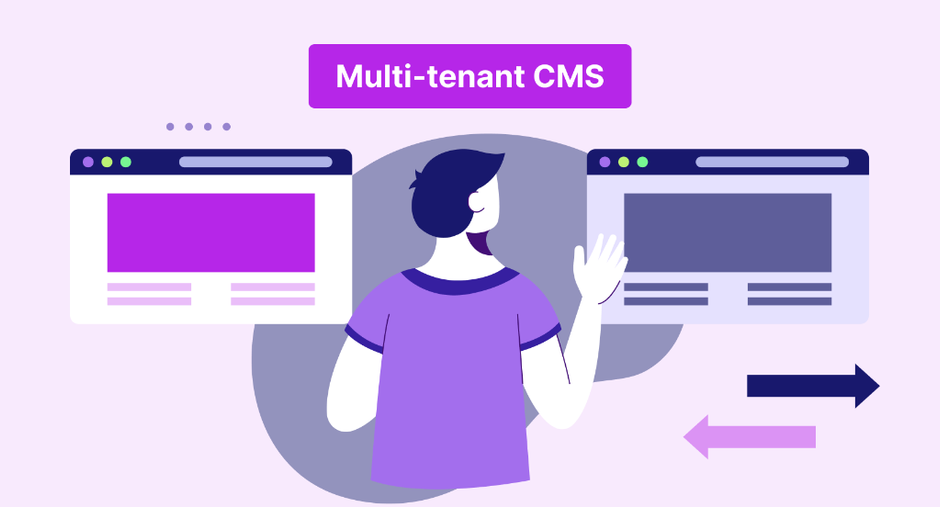
What is a Multi-tenant CMS?
A multi-tenant cms allows multiple independent environments ("tenants") to coexist within a single platform. Each tenant has isolated content, configurations, and user permissions, while sharing a common infrastructure. This setup is ideal for managing multiple websites, brands, or client portals efficiently.
Multi-tenant CMS setups are commonly used by agencies, SaaS platforms, franchises, and enterprises managing multiple brands or client sites. Here are real-world examples of platforms and businesses leveraging them:
Why Choose a Multi-tenant Headless CMS?
A Multi-tenant Headless CMS offers:
- Centralized content management across regions or brands
- API-first flexibility for seamless integrations
- Faster deployment of new sites or campaigns
- Reduced operational costs
Multi-tenant CMS Examples Usage in Real Business
Storyblok: Powers EasyPark (parking app with 20+ localized websites across Europe). Each country/region acts as a tenant, allowing local marketing teams to manage content independently while sharing infrastructure. Storyblok's "spaces" enable isolated environments per project.
Hygraph: Used by Vision Healthcare (consumer healthcare enterprise) to manage multiple brands. Each brand operates as a tenant with composable content, integrating with their eCommerce stack for scalable, SEO-optimized sites.
Payload CMS: Popular for custom multi-tenant apps, like SaaS platforms with dynamic tenant isolation (e.g., separate databases per tenant). Agencies and dev teams build branded environments across domains from one codebase: no extra costs.
CrafterCMS: Serves B2B agencies and franchises (e.g., fast-food chains managing local store sites). Tenants get full autonomy for content, with integrations for personalized customer portals.
Case Study: Multi-tenant CMS for EasyPark
 EasyPark - case study example of a multi-tenant CMS implementation by our team
A perfect example of our expertise is our work with EasyPark, where we implemented a multi tenant headless cms using Storyblok. EasyPark needed a scalable solution to manage over 20 localized websites across Europe.
Why Storyblok?
Although platforms like Payload CMS are strong contenders, for EasyPark's needs, Storyblok offered the ideal combination of flexibility and visual editing capabilities within a multi-tenant cms structure.
We considered options like multi tenant payload cms and even explored headless cms multi tenant setups with open source tools. However, Storyblok provided the best fit for rapid scaling and ease of use for local marketing teams.
Results
- Centralized management of 20+ websites
- Empowered local teams without developer bottlenecks
- A future-proof multi tenant cms friendly architecture
Key Security Challenges
Multi-tenant CMS platforms face several critical security challenges due to shared infrastructure and data isolation requirements. Here are the main risks with practical context for CMS implementations:
1. Cross-Tenant Data Leakage
The biggest risk: one tenant's content or user data accidentally exposed to another. This happens through:
Database query errors without proper tenant_id filtering
Shared cache poisoning where one tenant's content appears in another's pages
File storage misconfiguration exposing uploads across tenants
Example: A marketing agency using Payload CMS has Client A upload sensitive documents, but Client B sees them due to missing bucket isolation.
2. Tenant Impersonation & IDOR
Attackers manipulate tenant identifiers to access other tenants' content:
GET /api/content?tenant=clientA → changes to tenant=clientB Insecure Direct Object References (IDOR) let attackers guess content IDs across tenants.
3. Permission Overlaps & Privilege Escalation
Overly permissive roles (admin access bleeding across tenants)
Shared authentication flaws compromising multiple tenants simultaneously
Misconfigured RBAC where tenant admins access global settings
4. Noisy Neighbor Attacks
One tenant's heavy API usage slows down others, or malicious traffic targeting one tenant affects platform stability (DDoS amplification).
5. Compliance & Audit Complexity
GDPR, CCPA requirements become difficult:
Can't easily prove tenant data isolation during audits
"Right to be forgotten" requests require complete tenant data deletion
Mixed geographic data residency across tenants
Mitigation Strategies
- Database-level isolation (RLS, schemas, separate DBs for high-value tenants)
- Tenant context in ALL queries, cache keys, file paths
- Per-tenant rate limiting and resource quotas
- Separate encryption keys per high-security tenant
- Comprehensive audit logging with tenant context
Bottom line
Multi-tenancy saves significant infrastructure costs—often 70-80% lower hosting expenses compared to isolated single-tenant setups, but demands rigorous defense-in-depth security that most agencies fail to implement correctly. Focus Reactive, with 7+ years of production multi-tenant CMS deployments for SaaS platforms and marketing agencies, has mastered this balance through battle-tested patterns.
Our Expertise in Multi tenant CMS Solutions
At FocusReactive, we work across a range of technologies:
- Deep experience with Payload CMS multi tenant configurations
- Custom solutions using multi tenant headless cms open source platforms
- Strong background in both multi-tenant cms and API-driven architectures
We're a specialist Headless CMS agency helping teams transition to modern content platforms with clean architecture, scalability, and editorial control. If you're planning a replatform or building from scratch, get in touch — or book an intro call with our team.
More posts on related topics
Next.js CMS: Top 11 Headless CMS Choices for 2026
Explore the best CMS platforms for Next.js in 2026. Compare Sanity, Storyblok, Contentful, and Payload to find the right headless CMS for your modern React and Next.js projects.
Contentful CMS Overview: Headless Architecture, API-First Content Management
Dive into the Contentful CMS overview to see how it simplifies content management across multiple platforms, making it ideal for developers and content creators building scalable, API‑first digital experiences.
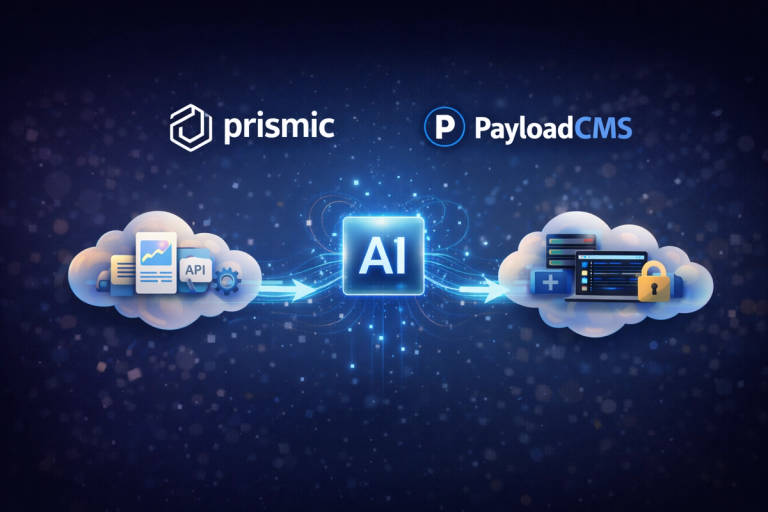
How We Use AI to Migrate Any CMS — A Prismic to Payload Walkthrough
Manual CMS migrations are slow by default. We built a pipeline instead — and used AI migration tooling to handle everything that usually takes weeks.
How to Choose a Headless CMS in 2026: A Straight-Talk Guide
Not sure how to choose a CMS? Compare Contentful, Sanity, Storyblok, Payload, and more — with clear defaults for enterprise, marketing, and content operations teams.

Storyblok vs Contentful in 2026: Key Differences for Developers & Marketers
A practical comparison of Storyblok and Contentful through the lens of marketing operations — helping marketing leaders choose the right CMS based on team workflows, content velocity, and localization needs.

Payload CMS: Scalable Headless CMS for Developers
Discover how Payload CMS combines the power of headless content management with developer-focused features for project flexibility and control.