
TL;DR
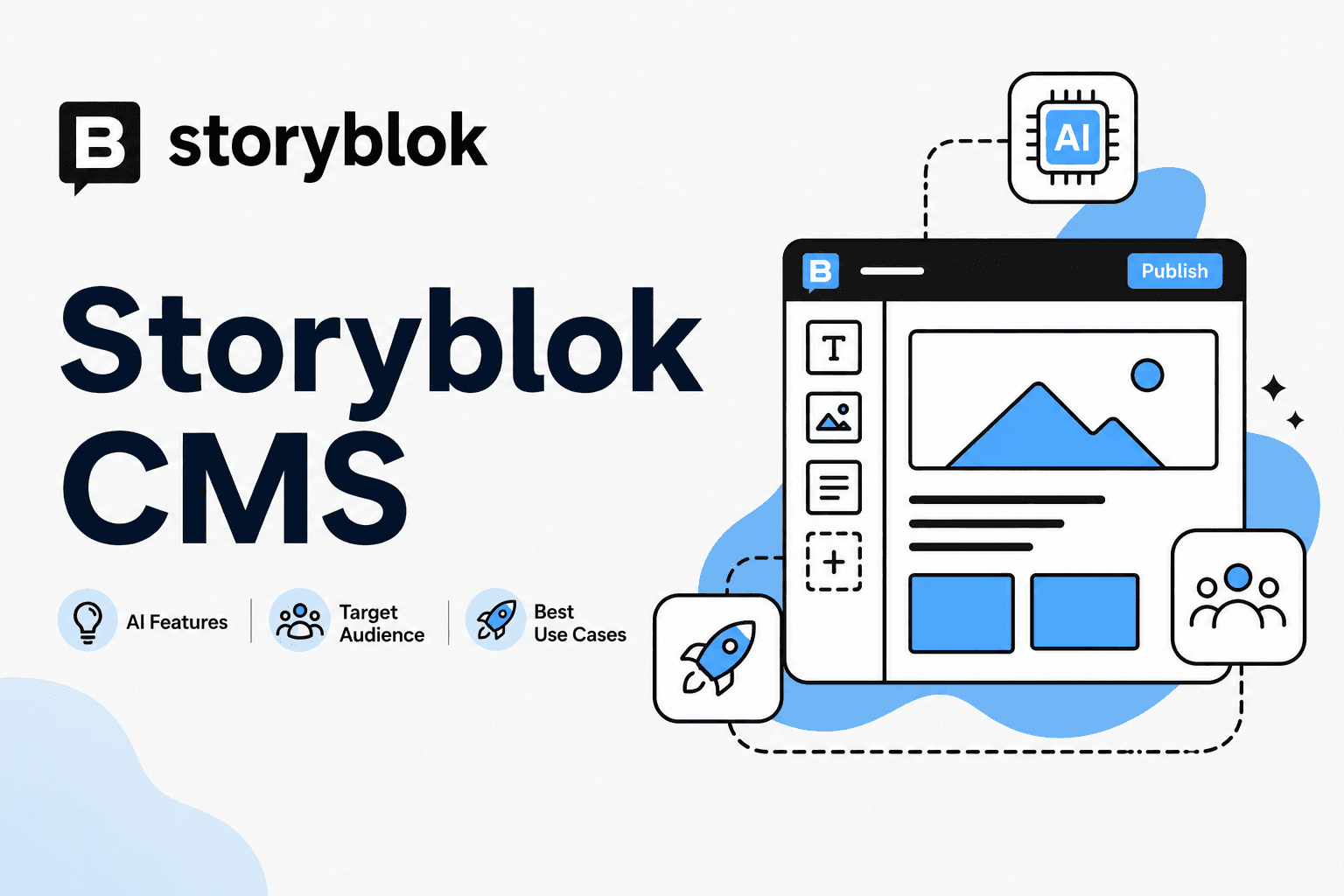
Storyblok is a headless CMS with a real-time visual editor and a fully API-driven content backend making it one of the few platforms where developers and editors are both first-class citizens. It’s an enterprise-grade, AI-augmented content platform, and built for teams who ship marketing sites, e-commerce experiences, and multi-brand digital platforms at scale. If you’re evaluating headless CMS options for a Next.js, React, or composable stack, Storyblok belongs on your shortlist, but it’s not the right fit for every use case.
This article is part of FocusReactive’s ongoing series on the top Next.js CMS options for modern development teams.
We’re a certified Storyblok development company with hands-on migration and web development experience across dozens of enterprise projects, so what follows is an expert view, not a marketing summary.
What is Storyblok CMS?
Storyblok CMS is a headless, API-first Content Management System that combines the structural flexibility of a traditional headless CMS with a live visual editing layer that non-technical content teams can actually use without developer involvement. It’s widely used by organisations ranging from growth-stage marketing teams to enterprise brands including Netflix, Adidas, and Pizza Hut.
Storyblok CMS is built around 3 ideas:
- Content as structured data: every piece of content lives as a reusable, composable Story made of configurable Bloks (components), not as a blob of HTML.
- Visual editing without the frontend prison: unlike WordPress page builders, Storyblok’s visual editor sits on top of your frontend, rendered inside the CMS via an iframe bridge. Editors see exactly what the live site will look like.
- Developer freedom: nothing about Storyblok’s backend dictates your frontend technology. React, Next.js, Nuxt, Astro, SvelteKit, Remix — all are supported via the Content Delivery API or the optional GraphQL endpoint.
The result is a platform that occupies a unique position in the headless CMS market: it’s approachable enough for marketing teams who need autonomy, and flexible enough for engineering teams who need to build complex content architectures.
Founded: 2017, Vienna
CMS type: Headless / API-first
Deployment: Fully managed SaaS (cloud-hosted)
Primary use cases: Marketing websites, multi-brand platforms, e-commerce content, multi-language digital experiences
What Does “Headless CMS” Actually Mean?
Storyblok positions itself as a headless visual CMS for developers and marketers for fast content management. But, what else is thought under this headless term? Unlike traditional or “hybrid” CMS platforms like WordPress or Drupal, a headless CMS decouples the content repository (the backend where content is authored, structured, and stored) from the presentation layer (the frontend that renders it for users). The CMS delivers content via API, typically REST or GraphQL, and your frontend application consumes it.
That tight coupling forces teams into plugin dependencies, theme limitations, and frontend performance ceilings.
Storyblok platform is headless by design, i.e:
- Your frontend is yours. Next.js, Astro, React Native, a progressive web app — the CMS doesn’t care.
- Content can be delivered anywhere. Web, mobile, digital signage, smart devices — a single content structure can serve all of them.
- Frontend performance is unconstrained. Static generation, incremental static regeneration, server-side rendering — none of these are limited by what the CMS can produce.
- Security is handled at the platform level. No plugins to patch, no version upgrade windows, no theme vulnerabilities.
Where Storyblok CMS differs from most headless CMS platforms is the visual editing layer. Pure headless tools like Contentful or Hygraph deliver content via API and leave rendering entirely to the developer. Storyblok adds a real-time preview bridge that lets editors interact with content visually, without sacrificing the headless architecture underneath.
Storyblok as Enterprise Content Management Software
Storyblok isn’t only positioned as a developer tool, it is built for enterprise content operations. As organisations scale their digital presence across brands, languages, regions, and channels, the demands on a CMS multiply. Storyblok’s enterprise tier addresses those demands with features that go beyond basic content authoring:
Multi-space and Multi-brand Architecture
Large organisations often need isolated content environments per brand, region, or product line, with shared component libraries accessible across them. Storyblok supports this through its Space model, allowing enterprise teams to partition content with separate access controls, workflows, and publication pipelines, while reusing components and design systems across spaces.
Granular Roles and Approval Workflows
Enterprise content operations require structured governance. Storyblok’s Premium and Elite tiers include custom roles and workflows, allowing organisations to define multi-step editorial approval chains, from contributor submission through editor review to publisher sign-off. Access can be scoped by space, content type, or language.
Release Management
For coordinated content campaigns — product launches, seasonal promotions, regulatory updates — Storyblok’s release management feature lets teams bundle changes across multiple stories into a single scheduled deployment. This removes the error-prone process of publishing individual pages manually under deadline pressure.
Compliance and Security at Enterprise Scale
Storyblok holds SOC 2 and ISO 27001 certifications. GDPR compliance is built into the platform architecture, with data residency options available for enterprise contracts. Two-factor authentication, IP restrictions, access token scoping, and audit logs (team logs) are all available at the appropriate plan tiers.
Uptime SLAs
For production digital platforms where downtime has direct revenue impact, Storyblok’s Elite tier offers a 99.99% uptime SLA backed by fully managed cloud infrastructure. Growth and Growth Plus tiers carry 97% SLAs; Premium carries 99.9%.
AI-Augmented Content Features
Storyblok has invested heavily in AI tooling embedded directly in the editorial interface, not as a separate product or integration:
- AI SEO: automatically generates optimised meta titles, descriptions, and Open Graph tags based on content analysis
- AI Translations: produces professional-quality translations at the click of a button, across all Storyblok-supported locales
- Ideation Room: a generative AI co-pilot for content creation and ideation, built into the editor
- Inline AI text operations: summarise, rephrase, change tone, expand or shorten copy without leaving the editing interface
For enterprise content teams managing high volumes of pages across multiple languages, these aren’t novelty features, they represent meaningful reductions in editorial cycle time.
Storyblok’s Features: A Developer and Editor View
The Visual Editor
Storyblok’s Visual Editor is the feature most frequently cited by clients as the deciding factor in choosing the platform. It works differently from WordPress page builders: instead of a proprietary frontend rendered inside the CMS, Storyblok’s editor loads your actual website in an iframe and injects a JavaScript bridge that makes individual Bloks clickable and editable.
This means editors see the genuine production frontend with real CSS, real fonts, real component behaviour, not a CMS approximation of it. Changes are reflected in real time. Mobile and desktop breakpoints can be previewed. No developer is needed for routine content updates, page creation, or layout changes using existing components.
For development teams, setting up the Visual Editor requires implementing the @storyblok/react (or equivalent) SDK and wrapping components with Storyblok’s storyblokEditable() utility. The integration is lightweight and well-documented.
Bloks: Component-Based Content Architecture
Storyblok’s content model is built around Bloks — reusable, configurable content components. A Blok is defined once in the Schema editor (with field types, validation rules, and nesting options), and can then be used anywhere in the content tree: in page sections, nested inside other Bloks, or pulled in as references across multiple stories.
This is meaningfully different from field-level content models (like Contentful’s) because it maps directly to how modern frontend development works. A developer builds a HeroSection React component; a content editor can create or configure a HeroSection Blok in the CMS and see it rendered immediately. There’s no translation layer between content structure and visual output.
Bloks support:
- Nested composition (Bloks inside Bloks)
- Field-level validation (required, regex, character limits)
- Custom field types via plugins (colour pickers, icon selectors, rich text extensions)
- Shared component libraries accessible across stories and spaces
Data Sources
For repeatable enumerated values, product categories, button styles, status labels, language codes, Storyblok’s Datasources provide a centralised definition that can be referenced by option fields across any Blok schema. When the values change, every field referencing that datasource updates automatically. This removes a common class of content inconsistency in large-scale CMS deployments.
Multi-language and Localisation
Storyblok supports two complementary localisation strategies:
Field-level translation — a single content entry with per-field translation variants. Suited to content types where structure is consistent across markets (product pages, feature descriptions) but copy differs by locale.
Folder-level translation — entirely separate content entries per locale, stored in dedicated folders. Suited to content types where structure itself varies by market (homepage layouts, campaign pages).
Both strategies can coexist in the same Storyblok space that makes it practical for enterprise deployments where different content types have genuinely different localisation requirements.
Combined with AI Translations, managing 10+ language variants becomes operationally tractable for content teams without specialist translation tooling.
API Flexibility: REST and GraphQL
Storyblok’s Content Delivery API (REST) covers the majority of content fetching use cases with a clean, well-structured response format. For Next.js projects, getStaticProps, getServerSideProps, and React Server Components all work naturally with the REST API.
The GraphQL API (available on Premium and Elite) allows teams to specify exactly the fields they need in a single query, reducing over-fetching in complex page structures. For large enterprise sites with deep content hierarchies, GraphQL can meaningfully reduce payload sizes and improve Time to First Byte.
The Content Management API covers programmatic content creation, bulk imports, schema management, and CI/CD pipeline integration — essential for teams migrating large content volumes or managing content as part of an automated workflow.
Webhooks and Build Triggers
Storyblok can trigger webhooks on any content event: story published, story unpublished, asset uploaded, schema changed. For statically generated sites (Next.js with ISR, Astro, Nuxt), this is how content changes in the CMS translate to live site updates without manual deploys. Multiple webhook targets can be configured, useful for triggering different environments (staging vs. production) from the same CMS publish action.
Storyblok Pricing (2026)
Storyblok operates on a tiered SaaS pricing model. All paid tiers include the Visual Editor and the full content authoring experience. Feature gating primarily affects governance, AI, scalability, and uptime guarantees.
| Plan | Price | Seats | Key Features |
|---|---|---|---|
| Community | Free | 1 | Testing and development. Not for production. |
| Growth | €99/month | 5 (up to 10) | Visual Editor, collaboration tools, 400GB traffic, 1 Space |
| Growth Plus | €349/month | 15 (up to 20) | Access control, story scheduling, 1TB traffic, 97% SLA |
| Premium | Custom | Custom | AI SEO, GraphQL, custom roles/workflows, release management, SSO, 99.9% SLA |
| Elite | Custom | Custom | Unlimited stories/assets, backups, IP restrictions, access token scopes, 99.99% SLA |
Additional seats on Growth and Growth Plus are €15/month each. Additional traffic is €75/month per 250GB.
For enterprise projects with complex access requirements, multi-brand architectures, or compliance mandates, Premium and Elite contracts include dedicated support, usage-based billing, and SLA guarantees appropriate for production deployments.
Where Storyblok Is the Right Fit
Storyblok CMS fits for organisations starting fresh, modernising legacy CMS infrastructure, or building on a composable/MACH architecture. It’s particularly well-suited to teams using React/Next.js on the frontend, organisations that need strong multi-language support, and marketing-led businesses where editorial autonomy, the ability to make content changes without developer involvement, is a strategic priority.
Strong Use Cases
Marketing websites and campaign platforms — Storyblok’s visual editor and component-based content model are purpose-built for the kind of page-heavy, frequently-updated marketing site where content teams need autonomy. Landing pages, campaign pages, blog sections, and product pages can all be managed without developer involvement once the component library is built.
Multi-brand digital platforms — organisations managing separate brands or product lines within a single digital operation benefit from Storyblok’s Space architecture, shared component libraries, and space-level access controls. Each brand team can have editorial autonomy within a governed content framework.
Multi-language and international deployments — Storyblok’s field-level and folder-level translation strategies, combined with AI Translations, make it one of the most practical options for teams managing content across 5–20+ language variants.
E-commerce content layers — for Shopify or custom e-commerce stacks that need a separate, editable content layer (editorial pages, blog, brand storytelling, landing pages), Storyblok integrates cleanly with Shopify Hydrogen and custom React frontends. It handles the content side; the commerce platform handles transactions and product data.
Next.js projects — Storyblok has deep, well-maintained integration with Next.js, including support for App Router, React Server Components, and ISR-triggered rebuild via webhooks. It’s one of our preferred CMS choices for Next.js projects at FocusReactive.
Use Cases That Warrant Careful Evaluation
Pure database-driven applications: if your primary need is a structured data store for application logic (not editorial content), Storyblok’s content model adds overhead without proportionate value. A purpose-built database or a more developer-centric tool like Payload CMS or Directus may be a better fit.
Highly structured product catalogue management: for large product catalogues with complex attribute schemas, pricing logic, and inventory management, a headless PIM or a commerce-specific solution will serve you better than a content-focused CMS.
Purely developer-authored content: if editors will never touch the CMS directly, and all content is programmatically generated or managed via API, the visual editor adds no value and the pricing may not be justified at lower plan tiers.
Who Use Storyblok? Target Audience and Common Projects
Looking at where Storyblok gets chosen in the real world — across agency work, enterprise procurement decisions, and direct developer adoption — clear patterns emerge. The use cases and the audiences that choose Storyblok aren’t random. There’s a meaningful correlation between the type of organisation, the role making the decision, and the kind of project they’re building.
The Decision-Makers
Digital Marketing Leaders and CMOs are among Storyblok’s most consistent champions, and the reason is editorial autonomy. The visual editor directly solves one of the most persistent frustrations in digital marketing: the dependency on developers to make routine content changes. When a CMO can see that their content team will be able to build landing pages, update campaign content, and manage multi-language variants without filing tickets, the platform’s value proposition is immediately legible. Storyblok’s AI SEO and AI Translations features reinforce this; they reduce the specialist overhead on tasks that were previously bottlenecks.
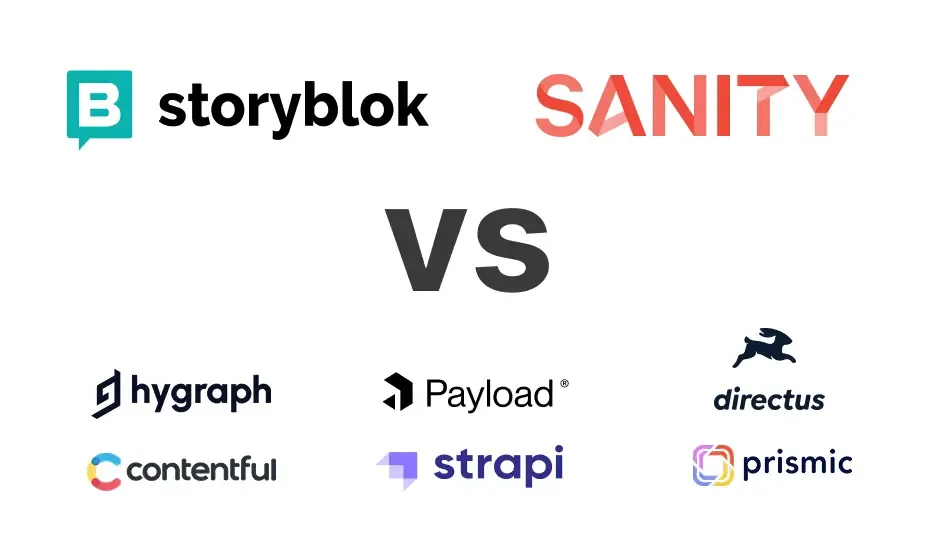
Technical Decision-Makers (CTOs, Tech Leads, Senior Engineers) choose Storyblok for different reasons: frontend freedom, clean API design, well-maintained SDKs, and a content model that maps sensibly to component-based frontend development. They’re typically evaluating it alongside Contentful, Sanity, or Payload CMS, and the visual editor’s quality often tips the decision when the project includes a marketing team as a primary content stakeholder.
Digital Agencies and Development Companies recommend Storyblok CMS when a client’s content team needs genuine autonomy post-launch. It’s also a strong recommendation for clients migrating from WordPress or Drupal who want to modernise without losing editorial confidence.
Product Managers at Scale-Up and Enterprise Companies often drive Storyblok adoption when an organisation has outgrown its current CMS. The trigger is usually one of: a performance ceiling on a WordPress or legacy platform, a need to expand into new markets or languages, a brand consolidation that requires managing multiple properties in a single system, or an engineering team that’s spending too much developer time on content maintenance.
Typical Project Profiles
The projects that consistently suit Storyblok share a set of structural characteristics. Understanding these helps clarify whether your project belongs in this category — or whether a different tool would serve better.
High-autonomy marketing platforms are the canonical Storyblok project. The defining characteristic is that the content team needs to create and manage pages, campaigns, and content variants independently — not just edit copy in pre-built templates. The business typically has a non-trivial volume of content (dozens to hundreds of pages), a marketing team that publishes frequently, and an engineering team that wants to build the component system once and then step back from routine content operations. The Storyblok visual editor with a well-designed Blok library is the closest thing to a genuine solution to this problem in the headless space.
Multi-market and multi-language digital presences are another consistent pattern. Organisations expanding into new geographies — whether scaling from two markets to ten, or managing a long-established global presence — need a CMS that handles localisation as a first-class concern, not as a plugin or workaround. Storyblok’s field-level and folder-level translation strategies cover the two main structural approaches, and AI Translations makes the operational side significantly more tractable for content teams that aren’t managing dedicated translation workflows.
Multi-brand platforms appear frequently in the Storyblok customer base for a structural reason: the Space model gives each brand editorial independence while a shared component library enforces design system consistency across properties. This pattern is common in media companies, retail groups, hospitality brands, and any organisation that has grown through acquisition and needs to consolidate disparate digital properties under coherent governance.
Composable commerce content layers — where Storyblok handles editorial content and a separate platform (Shopify, Commercetools, or custom) handles transactions and product data — are increasingly common as the composable/MACH architecture pattern matures. The typical project here is a fashion, lifestyle, or consumer brand that wants editorial-quality content experiences (lookbooks, editorial pages, brand storytelling) alongside a commerce layer, without building everything in a monolithic e-commerce platform that constrains frontend quality.
Greenfield Next.js builds for content-heavy businesses are probably the most natural Storyblok project type from a development perspective. When a company is building a new website on Next.js and has a non-technical content team that will own ongoing updates, Storyblok’s React SDK, App Router support, and visual editor bridge make the integration feel natural rather than bolted on.
The Pattern
The thread connecting all of these audiences and project types is a specific tension: the need for developer-quality frontend architecture (performance, maintainability, framework freedom) in combination with genuine editorial autonomy (non-technical teams who need to work without developer intervention).
Most CMS platforms resolve this tension by sacrificing one side: either the frontend is constrained by the CMS (WordPress, Webflow), or the editorial experience is too technical for non-developers (Contentful, pure headless tools).
Storyblok’s design: a fully headless backend with a visual editing layer built on top of the real frontend. The projects and audiences that gravitate toward it are, almost without exception, ones where both sides of that tension are real organisational constraints.
The content software will be a good choice for your content team, if they’re comfortable with a structured editor and doesn’t need a visual preview.
Storyblok for Development Teams: Technical Considerations
SDK and Framework Support
Storyblok maintains official SDKs for:
- React (
@storyblok/react) - Vue (
@storyblok/vue) - Nuxt (
@storyblok/nuxt) - Svelte (
@storyblok/svelte) - Astro (
@storyblok/astro) - Angular (
@storyblok/angular) - Next.js (covered by the React SDK with Next-specific utilities)
The SDKs handle the Visual Editor bridge, component resolution, and rich text rendering. For custom implementations or non-standard frameworks, the REST API and GraphQL endpoint can be consumed directly.
Schema-as-Code and CI/CD Integration
Storyblok’s component schemas are accessible via the Management API, which means schema definitions can be version-controlled, exported, and redeployed as part of a CI/CD pipeline.
This is an important consideration for teams managing multiple environments (development, staging, production) or running migration projects where content model changes need to be coordinated with frontend deployments.
Custom Field Type Plugins
Storyblok’s plugin system allows developers to build custom field types — rendered as micro-frontends within the CMS editor — using standard web technologies. The Storyblok marketplace includes community-contributed plugins for colour pickers, icon selectors, map embeds, Vimeo integration, and more. Teams with specific requirements can build bespoke field types without platform lock-in.
Performance Considerations at Scale
Storyblok’s CDN delivers content globally with low latency. For Next.js projects using Incremental Static Regeneration, the combination of Storyblok’s Content Delivery API and ISR produces fast, cacheable pages that revalidate on-demand via publish webhooks.
For projects with very high story counts (tens of thousands of entries), the Management API supports bulk operations that make large-scale content migrations and transformations practical.
Why Work with a Storyblok CMS Development Company
Choosing Storyblok is one decision. Implementing it well — with a content model that scales, a component architecture that doesn’t become a maintenance burden, and an editorial experience that content teams actually want to use — is a different challenge altogether.
Common mistakes in Storyblok implementations include:
- Over-engineered Blok schemas — building field-heavy, monolithic components that editors struggle to use and developers struggle to evolve
- Under-specified content models — launching with vague schemas that need painful restructuring six months later when content requirements crystallise
- Missing redirect strategy — critical in CMS migrations; redirects handled reactively after launch are a guaranteed source of organic traffic loss
- No content audit before migration — importing content from a legacy CMS without a structured audit brings tech debt, orphaned pages, and SEO issues along for the ride
- Editor handover gaps — shipping a Storyblok build without proper editorial training documentation leads to support burden on developers and underutilisation of the platform’s capabilities
An experienced Storyblok development company brings methodology to these decisions: content architecture workshops before build, migration checklists that include redirect mapping and SEO continuity, component library governance, and editor onboarding as a delivered output.
For a broader view of the European headless CMS partner landscape, see our Storyblok migration companies overview.
Summary
Storyblok CMS is one of the most mature and well-designed headless CMS platforms available in 2026. Its combination of a genuinely usable visual editor, a composable component-based content architecture, strong multi-language support, and an active AI feature roadmap makes it a compelling choice for a wide range of modern web projects.
It’s particularly strong for:
- Marketing and multi-brand websites built on React or Next.js
- Enterprise content operations requiring governance, compliance, and multi-language scale
- Organisations migrating from WordPress, Drupal, or legacy enterprise CMS platforms
- Teams that need editorial autonomy without sacrificing frontend architecture quality
Storyblok CMS is not the right tool for every scenario, teams building purely application-driven interfaces, managing complex product catalogues, or requiring deep integration with .NET enterprise systems should evaluate alternatives carefully.
If you’re planning a Storyblok implementation or a platform migration and want to get an honest read on scope, architecture, and risk before committing, book a call with our engineering team.





 Eugene Boruhov