







Headless CMS Development Agency
We build, migrate, and support scalable content platforms for companies in the US, Europe, and Australia.
The Core Offer
Every engagement starts with proven architecture. As a dedicated headless CMS development agency, we provide end-to-end services tailored to your roadmap:
Build We design and engineer scalable headless platforms from scratch—marketing websites, composable commerce frontends, and content portals with Next.js architecture ready for growth.
Migrate & Modernize We handle complex, full-scale migrations from legacy monoliths (WordPress, Drupal) to modern headless stacks with zero downtime, preserving your SEO rankings and redirect maps.
Ongoing Support Packages We offer dedicated monthly retainers for continuous feature delivery, performance engineering, and codebase maintenance, ensuring your platform evolves without accumulating technical debt.
What Sets Us Apart
Pragmatic Composable Architecture
We eliminate unnecessary SaaS subscriptions, integrating only the exact headless tools your scaling roadmap actually demands without over-engineering.
Unbiased Stack
We evaluate your unique data models and editorial workflows against the entire headless market to architect a custom stack that fits your business perfectly.
Tooling Without the Trap
We protect you from vendor lock-in by designing a minimal, modular architecture where every platform must continually prove its ROI to stay in your stack.
Privacy as a Headless Primitive
We bake strict WCAG accessibility and GDPR compliance natively into your frontend components from day one, eliminating the need for expensive post-launch remediation agencies.
AI-Ready Architecture & Crawlability
By optimizing your underlying composable infrastructure, we ensure your site exceeds the distinct, complex crawling requirements of next-generation AI agents.
Brand-Safe Visual Page Builder
Your editors get freedom within guardrails defined by your design system—impossible to break the brand, easy to ship new pages.
SaaS or Self-Hosted? We Just Solve It
Because we master both managed SaaS and open-source ecosystems, we architect the exact infrastructure your strict security requirements and budget actually demand.
We’ve built a scalable digital flagship for Arrive with Storyblok and NextJS
CMS Integrations
Payload CMS
Full-stack TypeScript CMS and application framework. Custom schemas, built-in authentication, file management, and a flexible admin UI—all in a single codebase. A strong choice when the CMS and application layer need to live together.
Storyblok CMS
Visual-first headless CMS with a real-time editor and component-based content model. The platform we recommend when editorial independence is the priority.
Sanity CMS
Real-time, API-first content platform with deep customization. Sanity's content lake architecture gives developers fine-grained control over complex editorial workflows.
Directus CMS
Open-source data platform that wraps any SQL database in a configurable headless CMS. The right pick when building on top of existing data structures or requiring full infrastructure control.
Contentful
An enterprise-grade, cloud-native CMS offering robust APIs, localization, and structured content modeling for massive global deployments.
Strapi
The leading open-source, developer-friendly Node.js CMS. Highly customizable APIs, a flexible admin panel, and absolute data control—perfect for teams needing robust self-hosted infrastructure.
Strapi service webpage →
Engineering Perspective
Once you go headless, the CMS handles content in — everything else is now an engineering decision. How you fetch, cache, render, and deploy that content determines whether you actually get the performance and flexibility you signed up for. That's the upside, and it's also the cost most teams underestimate going in.
How we work
Governed and Scalable, by Design
We design content models, editorial workflows, and governance into the architecture from day one to make your Information Architecture clean and usable as your team, markets, and channels grow.
Editorial UX boosts your marketing team's speed and freedom. They can build pages, launch campaigns, and manage content without needing developer help.
Performance & AI SEO by Default
Each project includes a complete SEO + LLM optimization. Performance baseline as standard: Core Web Vitals, structured data, rendering strategy, and AI SEO setup.
Scalable Next.js architecture derived from 7+ years of experience.
Already live? Our Next.js SEO audit gives you an actionable, dev-ready assessment of where you stand.
Predictable & Efficient Delivery
90% of our projects fit the initial budget. That comes from the time we invest upfront — understanding exactly what we're building before a single line of code is written.
Our CMS Kit has page builders, navigation, localization, content models, and SEO settings. It boosts every engagement. Plus, it won’t limit your choices. It's a smart starter refined across dozens of production deployments, not a constraint.
Headless CMS Projects We Ship
Marketing Content Platforms
As a specialized headless CMS agency, we make sure your marketing team can publish fast, experiment freely, and manage content across markets—without filing developer tickets. We deliver localization, A/B testing, and custom workflows backed by Core Web Vitals optimization.
Headless CMS Integration and Migration
Migrating from legacy CMS platforms is where most teams hesitate. We've executed migrations at scale—thousands of pages, preserved redirect maps, and maintained search rankings. Whether it's a migration or a greenfield integration, we've seen the architectural patterns before.
Headless eCommerce
We build high-performance storefronts using composable commerce architecture. From custom Next.js frontends connected to Shopify or Medusa, we design headless systems where products, campaigns, and editorial content relate seamlessly—creating rich shopping experiences that convert.
FAQs
Common questions about headless CMS development
It depends on the project.
Sanity excels at custom content modeling and real-time collaboration. Storyblok is the strongest option when editorial independence and visual editing are the priority. Contentful fits enterprise teams managing content at scale. Payload is ideal when the CMS and the application need to share a codebase. Directus works best when you're building on existing databases. DatoCMS is a strong performer for Jamstack projects that need speed.
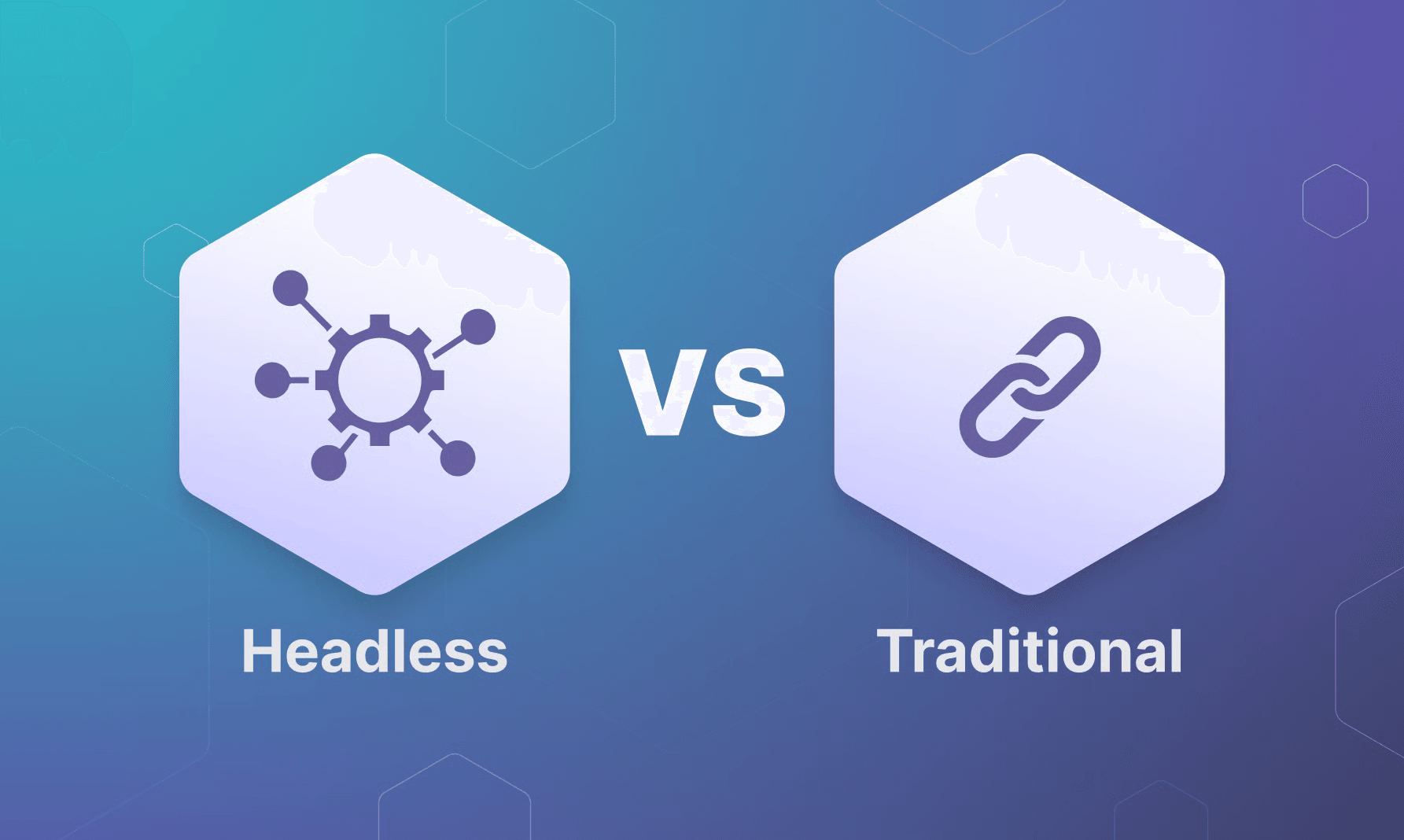
A traditional CMS like WordPress couples your content to a specific presentation layer — the theme controls how pages look, and the CMS generates the HTML. A headless CMS removes that coupling. Content lives in structured fields delivered via API, and your frontend team builds the presentation layer with whatever framework fits.
The benefit is flexibility: faster performance, reusable content across channels, and full control over your frontend stack. The tradeoff is that architectural decisions — content modeling, caching, preview infrastructure — need to be designed well.
Yes — when the architecture is set up correctly.
Headless CMS with Next.js gives you precise control over rendering strategy (ISR, SSR, static), structured data, meta tags, and Core Web Vitals — all of which directly impact search performance. The advantage over monolithic CMS platforms is that you're not limited by themes or plugins.
We include SEO and performance engineering in every project as standard, including structured data for GEO — making sure your content surfaces in AI-powered search results alongside traditional rankings.
Editorial independence is the big one — your content team publishes without waiting on developers.
Beyond that: significantly faster page loads, better SEO performance through modern rendering strategies, the ability to reuse content across web, mobile, and other channels, and a maintainable long-term codebase. For teams publishing at scale, headless architecture makes localization, A/B testing, and multi-market expansion substantially easier.
No. If you're running a simple blog or brochure site that doesn't need custom frontend development, a traditional CMS is probably simpler and cheaper.
Headless CMS makes the most sense when you need editorial independence, when performance and SEO are critical, when you're publishing across multiple platforms, or when your frontend requirements have outgrown what a monolithic CMS can support. We'll tell you honestly which approach fits — even if the answer isn't headless.
The right partner should talk about tradeoffs, not just pitch a vendor. They should be able to explain why they’d choose Sanity over Storyblok for your specific use case, or when a self-hosted platform like Strapi creates more operational overhead than it’s worth. They should also offer ongoing support packages to maintain the platform long after the initial build.
Engineering Blog
Best Headless CMS for React
Headless CMS vs. Traditional CMS
Let's Work Together
- Respond within a day
- Intro call to understand your project
- Proposal within 2-3 days