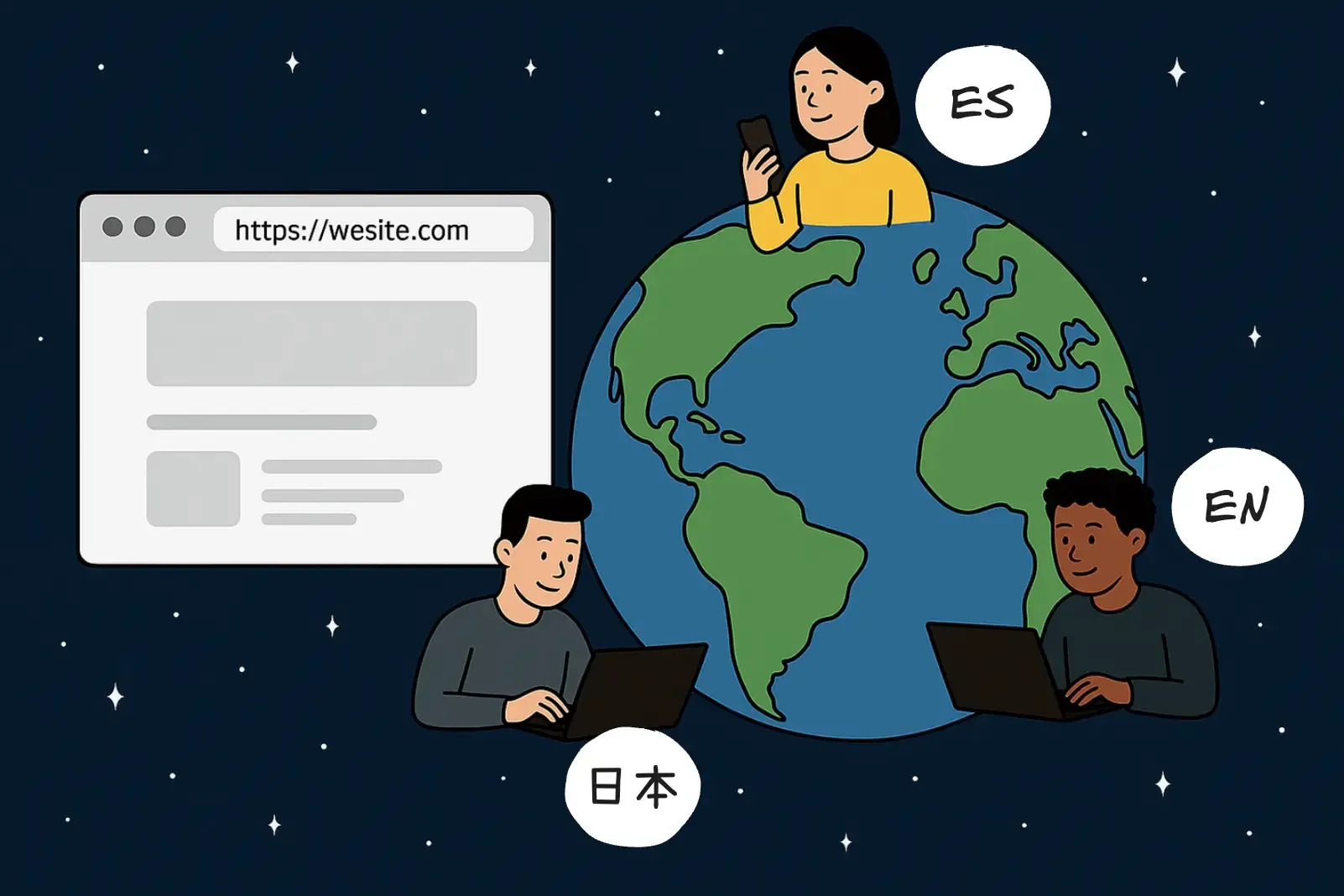

If you are publishing content across multiple markets, headless CMS localization quickly becomes more than a translation task. It becomes an operational challenge: how do you create, adapt, review, and publish thousands of content variations across languages and regions while keeping global content consistent?
While establishing a strong headless CMS localization architecture provides the foundation for managing global content, the actual execution of translating and populating that content remains a massive bottleneck. Relying on manual copy-pasting, spreadsheets, and basic translation scripts destroys the speed advantage a headless CMS is supposed to provide.
This is where AI-assisted localization transforms a slow, administrative chore into an automated, highly scalable workflow.
Why Manual Localization Fails to Scale
Manual localization works for a small website with a few languages. The problem appears when content volume, locales, and update frequency increase. Every new market introduces exponential overhead:
- Creating or duplicating CMS entries manually
- Managing translation files outside the platform
- Checking localized assets, references, and relationships
- Updating localized SEO metadata and URL slugs
- Re-executing the entire process whenever source content changes
At scale, this creates content drift between locales, slow publishing cycles, broken references, inconsistent terminology, and difficult-to-track review bottlenecks. The challenge is therefore not simply how to translate text, but how to operate localization as a repeatable, automated system.
Unlocking Enterprise Scale Through Localization Automation
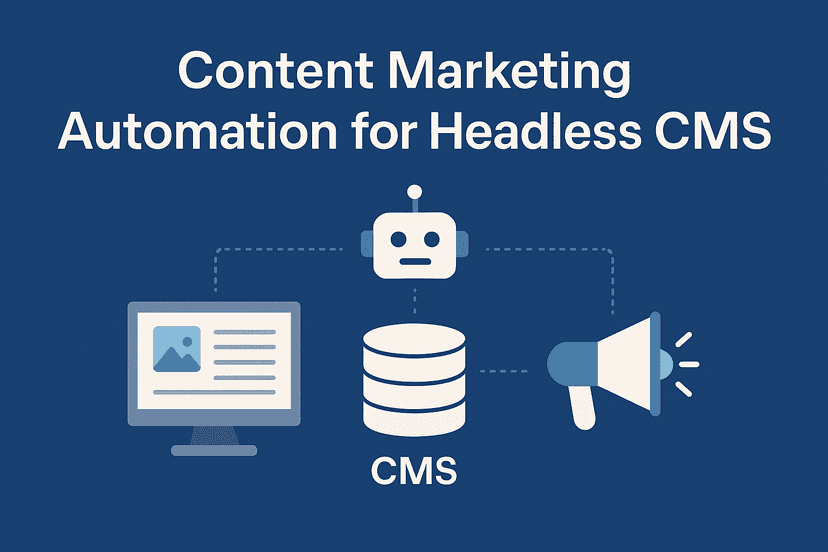
To eliminate these operational bottlenecks, modern global marketing teams are turning to localization automation. Rather than treating translation as a disconnected step after content creation, CMS localization automation embeds automated triggers directly into your content lifecycle. Establishing an automated localization pipeline ensures that whenever source content is updated, the changes are automatically flagged, duplicated across target locales, and routed through automated translation workflows. This shift to continuous localization reduces administrative overhead, eliminates human copy-paste errors, and allows global engineering and content teams to ship updates to dozens of markets simultaneously.
What makes headless CMS content hard to translate?
In a headless CMS, content is structured data, usually nested JSON, not text on a page. A translation tool has to change the human-readable values and leave the structure alone. Simple translation scripts fail in three places.
1. JSON schemas
Problem: Machine translation can’t tell display text from system values. If it translates a value the frontend relies on, such as changing "variant": "primary" to "variant": "primario", the component stops rendering and the page breaks.
How AI handles it: AI localization tools work from the CMS schema. They translate only the fields marked as translatable, such as text, titles and alt text. Keys, IDs, enum values and references stay as they are.
2. Rich Text and Portable Text Problem: Sanity (Portable Text) and Storyblok (block-based rich text) mix text with component references, inline data and styling marks. Standard machine translation strips or corrupts that markup. How AI handles it: The tool extracts only the text strings from each block and translates them. It then puts each one back in the exact same position in the JSON tree, so marks, component IDs and references are untouched.
3. Component duplication Problem: Before any text changes, a localized page needs an exact copy of its nested structure (hero banners, carousels, CTA blocks) in the new locale. How AI handles it: The workflow uses the CMS Management API to clone the full component tree for each target locale, then fills in the translated fields.
Traditional Methods vs. AI-Powered Automation
Engineering and content teams typically evaluate three traditional translation methods, all of which present severe limitations at enterprise scale:
The comparison below shows where traditional localization approaches tend to slow down and where AI-assisted CMS workflows create leverage.
| Approach | Scale | Context | Automation | Human review | Best for |
|---|---|---|---|---|---|
| Human translation | Low–medium | High | Low | High | Legal/high-value content |
| CMS plugins | Medium | Low–medium | Medium | Medium | Smaller multilingual sites |
| Translation API | High | Medium | High | Medium | Custom integrations |
| AI + CMS automation | High | High* | High | Required | Large structured websites |
- Context quality depends on the AI model, prompts, terminology controls, validation, and human review.
- Human Translation: Highly accurate and culturally nuanced, but slow and expensive. Translating tens of thousands of dynamic entries, product descriptions, and metadata fields manually can delay time-to-market by months.
- CMS Plugins & Scripts: Basic translation plugins are fast but lack context. They provide word-for-word translations that fail to capture brand tone, ignore character limits for UI components, and require heavy manual cleanup.
- Machine Translation APIs (DeepL, Amazon Translate): Integrating translation APIs directly into the CMS codebase offers speed, but building and maintaining custom integrations requires significant development effort. Standard machine translation also lacks semantic context and brand awareness.
Modern AI models can bridge some of this gap by combining the scalability of machine translation with greater awareness of context, terminology, and brand guidelines. Human review is still required for high-value, regulated, or culturally sensitive content.
5 Core Operations Where AI Accelerates Headless Localization
Integrating AI directly into your headless CMS (such as Contentful, Sanity, or Payload) automates both the language and the underlying data structure. If you haven’t chosen a platform yet, selecting the right multilingual CMS solution for your modern website is the critical first step before building these AI pipelines:
1. Automated Entry Duplication & Structuring
When hundreds of pages need to be prepared for a new locale, creating the CMS entries manually is a bottleneck. AI workflows interact with the CMS Management API to automatically duplicate the underlying component structures and references for the new locale, allowing editors to skip data entry entirely.
Example Localization Data Model
A reliable localization workflow should track more than the translated text itself. Each localized entry should retain a relationship with its source content, locale, version, and review status.
For example:
````json { “sourceId”: “page-123”, “locale”: “de-DE”, “status”: “draft”, “translationStatus”: “review”, “sourceVersion”: 12, “translatedVersion”: 12 }`
2. Context-Aware Prompt Engineering
AI models can be guided by system prompts that include your brand guidelines, negative constraints, and contextual glossaries. For example, an AI pipeline can be instructed: “Translate the following marketing copy into Spanish. Maintain an approachable tone. Do not translate ‘FocusReactive’. Keep call-to-action text under 20 characters.”
3. Localized SEO Metadata Generation
Direct translations of English keywords often have zero search volume in other regions. AI can analyze the core content of a page and generate localized SEO titles, meta descriptions, image alt text, and URL slugs tailored to local search intent.
4. Safe Rich Text & Portable Text Parsing
Advanced AI localization tools are built to parse complex CMS data structures. They extract only human-readable string values from Portable Text or Rich Text blocks, translate them, and inject them back into the exact position within the JSON tree without corrupting structural tags or component IDs.
5. Continuous Localization QA
AI serves as an automated quality assurance layer across published content. It can scan thousands of entries across locales to flag missing translations, inconsistent terminology, broken metadata, or translated copy that is unexpectedly longer or shorter than the source.
Case Study: Firsty’s AI Localization Rollout
To understand the practical impact of AI localization at scale, consider our recent work with Firsty, an innovative global eSIM provider. Firsty needed to launch a new multilingual website built on Storyblok CMS. The challenge was substantial: take 300 existing English pages and translate all content into 6 languages for multiple international markets to support their global rollout. Relying on human translation and manual CMS entry would have taken the team weeks of administrative work. Instead, we’ve implemented the FocusReactive Storyblok AI Toolkit. Our engineering goal was to automatically generate the required page architectures for each language. We configured the AI toolkit to duplicate the entire nested component architecture across all 300 pages and accurately populate the localized fields in all five languages simultaneously. The AI processed complex component trees—including nested feature grids, pricing tables, and SEO metadata—while preserving all layout references. The result was 1,500 highly accurate, fully structured, localized pages generated in a matter of hours, allowing Firsty to go live globally weeks ahead of schedule.
Designing a “Human-in-the-Loop” Workflow
While AI handles the heavy lifting, enterprise localization requires a “Human-in-the-Loop” (HITL) workflow to ensure quality and compliance. The most effective setups do not publish AI output directly to production; they automate the staging process. A best-practice automated workflow operates as follows:
- Trigger: An editor finalizes the primary English content and triggers a “Ready for Localization” webhook in the CMS.
- Processing: A serverless function intercepts the webhook, extracts the source JSON payload, and passes it to the AI localization service along with brand glossary prompts.
- Injection: The AI returns the translated data. The serverless function uses the CMS Management API to create new draft entries for each target locale.
- Notification: An automated alert notifies regional content managers in Slack or Teams that localized drafts are ready for review.
- Approval: Regional managers review the drafts, adjust any cultural nuances, and press “Publish.” This workflow reduces the editor’s job from hours of copying, pasting, and formatting down to a simple review phase.
Engineering a Robust and Fail-Proof AI Workflow
Building an AI localization pipeline is not just about sending a prompt to an API; it requires resilient software engineering. When processing thousands of pages simultaneously, networks fail and APIs time out. A robust headless AI integration must account for:
- API Error Handling & Rate Limits: When translating hundreds of entries, you will inevitably hit AI model rate limits or CMS API bottlenecks. Custom toolkits must be engineered to catch these errors, pause, and safely retry without duplicating content.
- State Saving & Interruption: If a process fails halfway through (e.g., running out of API credits), the system must save temporary results. Our AI toolkit ensures that you don’t have to start a 1,500-page translation batch from scratch if an error occurs at page 800.
- Cost & Speed Optimization: AI translation costs have dropped significantly, but scaling requires strategy. A good practice is to route different content types to different models—using faster, cost-effective models for standard UI strings, and advanced, context-heavy models for marketing copy.
- Data Privacy and Security: If your CMS contains sensitive intellectual property or pre-launch product details that cannot be shared with public APIs, your localization architecture can be configured to use self-hosted AI models running on private cloud infrastructure or local servers.
The Hidden Challenge: Frontend UX and UI Testing
Translating content inside the CMS is only half the battle. Because headless architecture decouples content from presentation, you must ensure that AI-translated content does not break your frontend UI. Content expansion and contraction are major risks:
- German compound words are notoriously long and can easily break button widths, stretch navigation bars, or overflow mobile layouts.
- Concise Asian characters may leave layouts looking empty or vertically unbalanced.
- Right-to-Left (RTL) languages like Arabic require entirely mirrored UI components and adjusted flexbox directions on the frontend. To scale successfully, teams must pair automated CMS workflows with rigorous in-market UX testing. AI ensures content is populated rapidly inside the CMS, but frontend engineering ensures the translated text delivers an intuitive experience on the live website.
Automated Visual Regression Testing
One of the most effective ways to scale localization quality assurance is through automated visual regression testing. Even when translated content is technically correct, it can introduce visual defects that affect usability and brand consistency. Common localization-related UI problems include:
- Button overflow caused by longer translated text
- Navigation breakage resulting from expanded labels
- RTL layout problems in Arabic and Hebrew interfaces
- Text truncation in cards, banners, and product grids
- Mobile responsiveness issues across localized breakpoints Rather than relying on manual page reviews, modern teams use screenshot-based testing tools to compare localized interfaces against approved design baselines. Popular visual regression solutions include:
- Playwright
- Percy
- Chromatic
- Applitools A typical workflow looks like: CMS Content Update ↓ AI Localization ↓ Preview Environment Creation ↓ Automated Screenshot Capture ↓ Baseline Comparison ↓ Visual Difference Detection ↓ Reviewer Approval ↓ Production Release
Where AI Still Requires Human Governance
AI is an operational accelerator, not a replacement for human judgment. To run a sustainable global content engine, teams must maintain human oversight in specific areas:
- Localization Governance: Defining editing permissions, review thresholds, and approval chains across regional teams.
- Legal and Regulatory Content: Terms of service, privacy notices, compliance statements, and regional pricing conditions must be reviewed by local legal experts.
- Cultural Adaptation: High-value marketing campaigns and brand messaging require human review to ensure tone and cultural idioms resonate locally.
- International SEO Strategy: While AI generates metadata drafts, human SEO strategists must design the overall hreflang strategy, canonical URL mapping, and indexation rules.
Scaling Headless Localization with AI, UX Testing, and Visual Regression
Headless localization is no longer simply a translation challenge. It is a continuous process that combines AI-powered localization, content governance, automated QA, visual regression testing, and multilingual UX validation. While AI dramatically accelerates content creation and localization workflows, successful global websites also require rigorous testing processes that ensure translated content performs correctly across devices, languages, and markets. Organizations that combine AI localization with automated quality assurance and user experience testing gain the ability to scale globally without compromising content quality or frontend performance.




.png&w=828&q=75)